



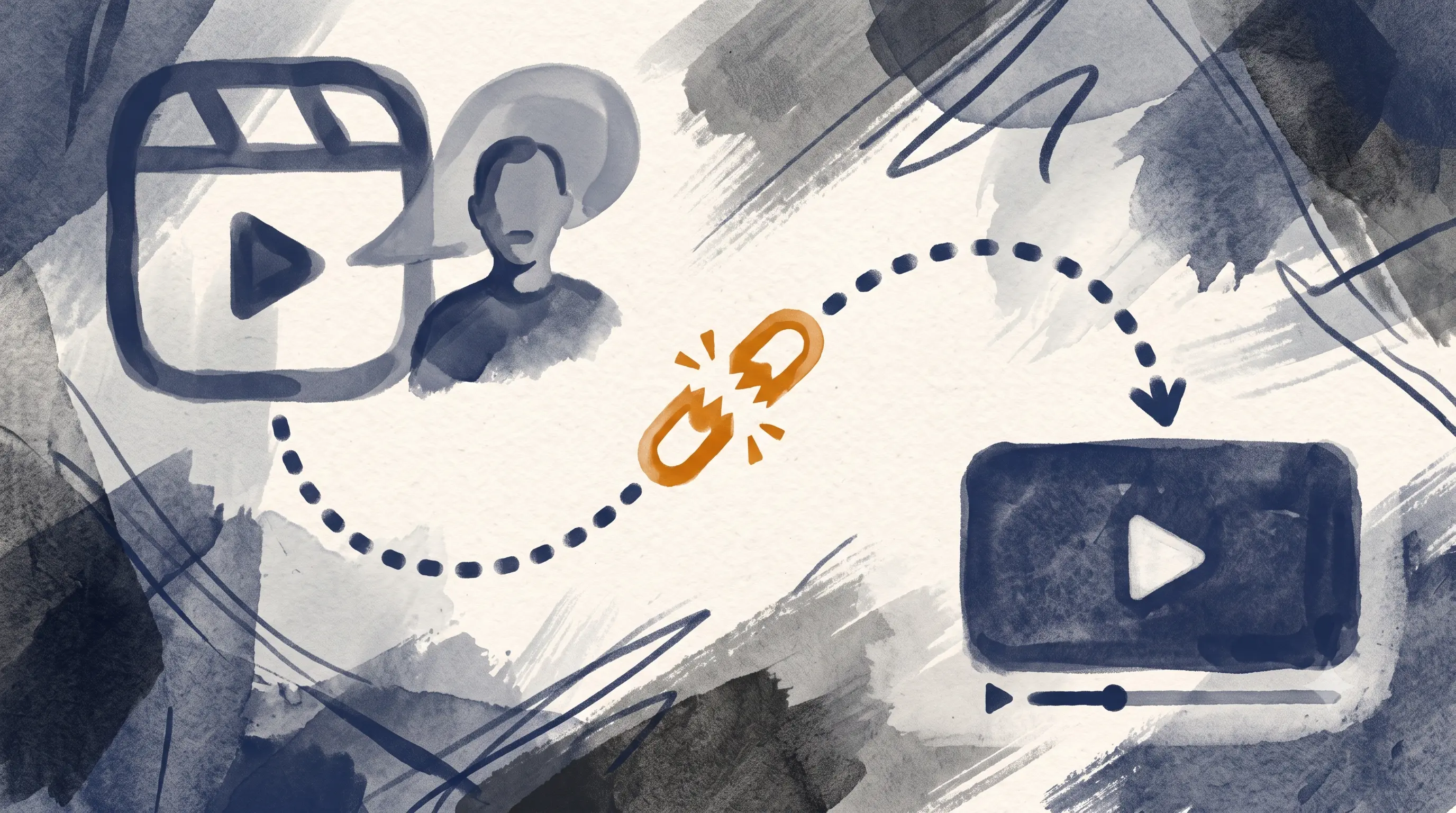
The generic version of this advice is everywhere: put your YouTube link in your Instagram bio, tease your video in a Reel, post consistently. All true, none of it explains why so many creators do exactly that and still see almost no Instagram followers turn into YouTube subscribers. Two specific things are usually the actual problem, and most guides skip both.
A cross-platform funnel is a content strategy where one platform builds awareness and trust while directing that audience toward a second platform for the full experience. It works by giving the first platform's audience enough value to establish credibility, without giving away so much that there's no reason to click through. Most commonly used by creators moving an audience from a short-form, algorithm-driven platform toward a long-form, subscription-based one.
The Hub-and-Spoke Model
A useful framework from ThumbMentor's cross-platform guide describes the mechanics directly: platform follower sees your content regularly, gets teased with partial value, clicks through to YouTube, watches a full video, subscribes if the content delivers. The critical detail is "partial value." Each spoke platform, Instagram in this case, should establish your expertise and build trust, but stop short of delivering the complete value the full YouTube video offers. Post the entire video as a Reel and there's no reason left to visit YouTube at all.
The same source is honest about how long this actually takes to evaluate: roughly three months of consistent effort, three to five posts a week, before you can reliably measure whether it's driving real YouTube traffic. Check YouTube Studio's Traffic Sources report under External after that window, not after two weeks of trying.
The Link Problem Nobody Mentions
Here's the detail most cross-platform guides skip entirely. According to reporting from Manychat, a YouTube link shared through Instagram, in a bio, a DM, or a caption, opens inside Instagram's own in-app browser by default, not the YouTube app itself. Most people aren't signed into YouTube inside that in-app browser, which makes the one-tap subscribe action meaningfully harder than it should be. The fix is a deep link, a reformatted URL from a service that forces the link to open directly in the YouTube app, where the viewer is already logged in. It's a small technical detail with an outsized effect on whether a click actually converts to a subscription.
What Kills Conversion
Beyond the link issue, a few patterns reliably undercut this funnel. Pure self-promotion, posting "new video, go watch!" without any standalone value on Instagram itself, gets ignored, audiences on a spoke platform tune out content that only exists to sell them on leaving. Full content duplication removes the incentive to visit YouTube at all, the hook belongs on Instagram, not the whole video. And inconsistent posting, once a month or sporadically, never builds the recognition needed for a follower to trust the jump to a second platform and subscribe.
Where Repurposing Fits In
The teaser clips that make this funnel work are, functionally, repurposed cuts of your YouTube content, formatted for Instagram's aspect ratio and pacing, captioned for sound-off viewing, and trimmed to the hook rather than the full explanation. Consistency matters here specifically: if your Instagram teasers look and sound different from video to video, inconsistent captioning, inconsistent branding, that inconsistency undercuts the trust-building the hub-and-spoke model depends on. A viewer who's seen five well-formatted teasers is more likely to click through and subscribe than one who's seen five that felt thrown together.
Research from BCG estimates India's creator economy already spans 2 to 2.5 million monetized creators. At that scale, cross-platform repurposing isn't a one-off task, it's a repeated weekly workflow, and the formatting consistency that makes each teaser convert is exactly the part that gets harder to sustain by hand as posting volume grows.
Frequently Asked Questions
How long does it take to convert Instagram followers into YouTube subscribers?
Realistically, around three months of consistent posting, three to five times a week, before you have enough data to evaluate whether the strategy is working. Check YouTube Studio's External traffic source after that window.
Should I post my full YouTube video on Instagram?
No. Posting the complete video removes the reason to visit YouTube at all. Post the hook or a partial cut, and let the full value live on YouTube.
Why don't YouTube links from Instagram convert well?
YouTube links shared through Instagram open inside Instagram's in-app browser by default, where most viewers aren't signed into YouTube, making it harder to subscribe. A deep link fixes this by opening the YouTube app directly.
What should go in my Instagram bio to drive YouTube subscribers?
Link to your YouTube channel page rather than a single video, so new visitors can browse your full library, and mention your upload schedule directly in your bio text.
Does reposting the same content help or hurt cross-platform growth?
It generally hurts. Audiences on the spoke platform tune out pure self-promotion, and full content duplication removes any incentive to click through to YouTube.
Converting Instagram followers into YouTube subscribers depends on two things most generic advice skips: a hub-and-spoke content model where Instagram delivers partial value and YouTube delivers the full experience, and a technical fix for YouTube links opening in Instagram's in-app browser where viewers aren't logged in. Realistic evaluation takes about three months of consistent posting, not two weeks. Formatting consistency across teaser clips, captions included, is what makes repeated viewers trust the jump enough to subscribe.
Keeping captions consistent across every teaser clip is the detail that's hardest to sustain by hand once you're repurposing weekly. This guide covers the captioning side of that workflow, relevant whether the destination is Instagram, YouTube, or both.