



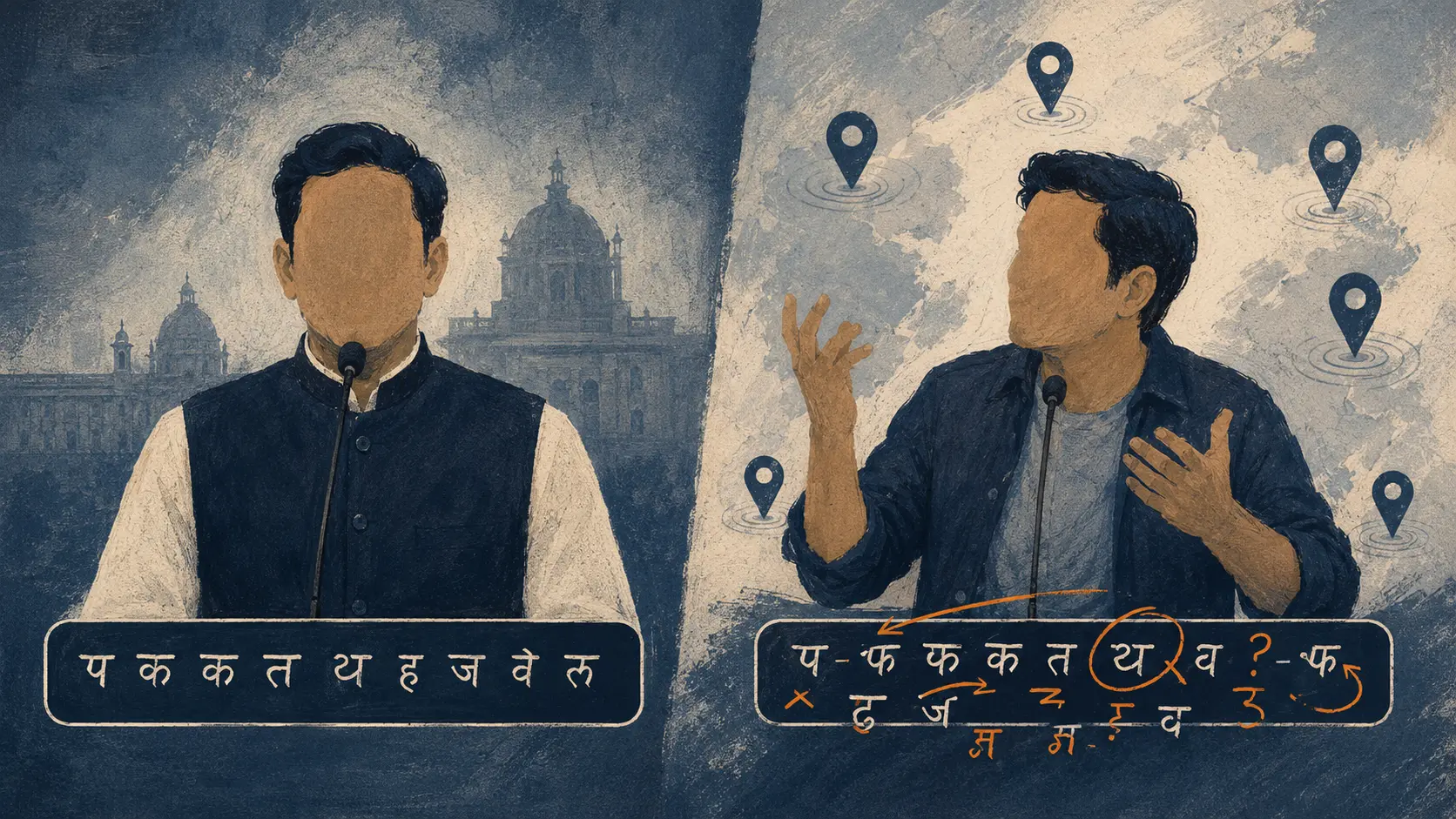
Hindi isn't a coverage problem anymore. Every major subtitle tool supports it, Instagram's native captions handle it, and the "does this tool even offer Hindi" question that matters for several other Indic languages doesn't really apply here. The real question for Hindi content is accuracy, specifically on regional accents, colloquial and Bollywood-style delivery, and Hindi-English code-switching, not whether the language is listed.
A Hindi subtitle app is software that transcribes Hindi spoken audio into timed, on-screen text automatically. It works by running speech-to-text tuned for Hindi phonetics and script. Most commonly differentiated today on accuracy for specific speech patterns, regional accents, casual delivery, code-switching, rather than basic language availability, which is no longer the limiting factor it once was.
Why Availability Isn't the Differentiator Anymore
Submagic, CapCut's translation feature, VEED, and most mainstream tools all list Hindi as supported. Instagram's own native captions handle Hindi directly. For a creator asking "which tool supports Hindi," the honest answer is most of them do. That makes the useful comparison different from the Telugu, Bengali, or Kannada posts in this series, where availability itself is the first filter.
Our Pick: ButterCut, for Accuracy on Real Hindi Speech Patterns
ButterCut's Hindi transcription is built around Indian accents and code-switched speech specifically, not adapted from a model trained primarily on formal, news-anchor-style Hindi. That distinction matters because most everyday Hindi content, vlogs, product reviews, casual commentary, doesn't sound like formal Hindi, and generic models benchmarked on clean, formal audio show real accuracy drops on regional accents and casual delivery.
The honest scope: for clear, formal Hindi delivery, several other tools perform well too. The differentiator shows up specifically on accented, colloquial, or code-switched speech. Test it against one of your own Hindi clips, ideally one with natural, unscripted delivery rather than a formal read.
Where Accuracy Actually Diverges Between Tools
Regional accent variation. Hindi spoken in Mumbai, Delhi, Lucknow, and Patna carries real phonetic differences, and models trained predominantly on one regional accent or on formal broadcast Hindi show measurably more errors on others.
Colloquial and Bollywood-influenced vocabulary. Casual Hindi content often uses slang, Bollywood-derived phrases, and informal contractions that differ from textbook or news Hindi, another place general-purpose models trained on formal audio tend to stumble.
Hindi-English code-switching. Research on code-switched speech found automatic speech recognition models see a 30 to 50 percent increase in Word Error Rate on code-switched audio compared to single-language input. This is common enough in everyday Hindi content that it's covered in more depth in a separate post specifically on Hinglish captioning.
Comparison Table
| Tool | Hindi Availability | Accuracy Focus | Code-Switching Handling |
|---|---|---|---|
| ButterCut | Confirmed core language | Built for accents and casual delivery | Built for Hindi-English code-switching |
| Submagic | Confirmed core language | Strong for clear, standard delivery | Not code-switch specific |
| Instagram native | Supported | Varies with accent and background noise | Not handled specifically |
| VEED | Included in broad language list | Not Hindi-specific claims published | Not stated |
Where it works
- Clear, formal Hindi delivery, most tools handle this well
- Standard news-style or scripted Hindi content
- Occasional posting where minor accuracy gaps are easy to correct manually
Where it doesn't
- Strong regional accents outside the training data most models default to
- Casual, colloquial, or Bollywood-influenced vocabulary
- Hindi-English code-switched speech, common in everyday content
Frequently Asked Questions
Does every subtitle app support Hindi now?
Most mainstream tools do, including Submagic, VEED, and Instagram's native captions. Availability is no longer the main differentiator for Hindi the way it is for several other Indic languages.
Why do Hindi captions still have errors if the tool supports Hindi?
Support for the language doesn't guarantee accuracy on every accent or speech style. Regional accents, casual delivery, and Hindi-English code-switching all show measurably higher error rates on models trained primarily on formal, single-accent audio.
What's the best subtitle app for Hindi accuracy, not just availability?
Look for a tool that specifically addresses accent variation and code-switching, not just one that lists Hindi as supported. ButterCut is built around that distinction directly.
Hindi availability is no longer the differentiator it once was, most mainstream subtitle tools support it. The real gap is accuracy on regional accents, casual or Bollywood-influenced delivery, and Hindi-English code-switching, speech patterns generic models trained on formal audio handle less reliably. ButterCut is built specifically around those patterns rather than basic Hindi availability.
If your Hindi captions are technically generated but consistently need correction on accent or casual phrasing, start a free ButterCut trial and test it against your actual speech style.